Unlock the full potential of your terminal.
Terminal Operating System

Unlock the full potential of your terminal.

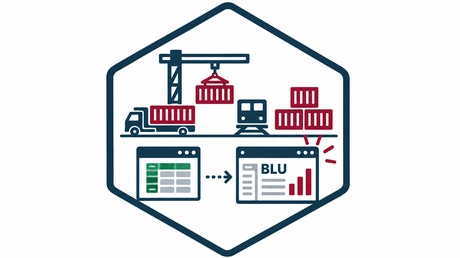
BLU, the leading terminal operating system, transforms manual terminal operations at intermodal and container terminals into fully digital, automated processes. BLU provides you with the digital control you need to handle more cargo with the same resources: in a clear, reliable, and automated way.
What is BLU?

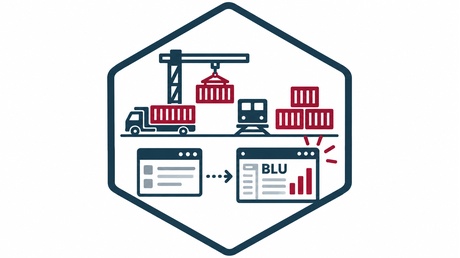
BLU is a Terminal Operating System (TOS) developed by Berghof Process Control & Logistics GmbH for intermodal and container terminals (combined transport): It digitizes and automates manual terminal operations, controls train and truck processes, manages loading units and crane orders, and provides real-time transparency across all terminal processes—with a modular design tailored precisely to the operations of each individual terminal.

Better performance. Greater transparency. More growth.

BLU measurably increases the efficiency of your terminal—without requiring additional space or handling equipment.

Our customers experience these six benefits from day one.

Increasing Productivity Without Additional Infrastructure

Increasing Productivity Without Additional Infrastructure

Significantly increase your terminal's efficiency—without investing in additional space or handling equipment.

Sustainable Reduction in Operating Costs

Sustainable Reduction in Operating Costs

Optimized processes reduce empty runs, manual coordination, and error rates—thereby lowering your costs per shipment.

Transparency as the Foundation for Better Decisions

Transparency as the Foundation for Better Decisions

Real-time data provides a comprehensive view of all processes and lays the foundation for well-informed, rapid operational decisions.

Stable and predictable processes

Stable and predictable processes

Standardized and automated workflows ensure greater process reliability and reduce operational dependencies.

Optimizing Service Quality

Optimizing Service Quality

Improved predictability and shorter lead times enhance your reliability in the eyes of customers and partners.

Scalability for Future Growth

Scalability for Future Growth

Handle increasing volumes with your existing resources and lay the groundwork for further growth.

BLU in Practice: Three Typical Starting Points

Terminals come to BLU with different requirements. These three scenarios illustrate what the onboarding process actually looks like and how operations will change.

BLU Scenario 1
Scenario 1

Small terminal replaces Excel-based processes.

A domestic terminal handling 20,000–50,000 TEU per year still coordinates incoming and outgoing trains, truck handling, and crane orders using spreadsheets and verbal instructions. The error rate rises with volume, and it takes new employees a long time to get the hang of things.

  • All processes in a single centralized interface—no more data loss between shifts
  • Onboarding of new dispatchers is accelerated through guided dialogues
  • A foundation for future growth without the need to upgrade the IT infrastructure


BLU Scenario 2
Scenario 2

A scalable terminal replaces a rigid legacy system

A terminal with increasing cargo volume is using a TOS that is no longer being updated. Specific requirements—such as the handling of hazardous materials, direct connections to rail carriers, or digital clearance—cannot be accommodated. Workarounds consume operational capacity.

  • Hazardous materials, customs clearance, and rail carrier communication are natively integrated into the system
  • Custom extensions are developed in collaboration with Berghof—short implementation cycles
  • Same throughput with less manual effort thanks to automated crane sequencing
BLU Scenario 3
Scenario 3

Establishment of a new intermodal terminal on a greenfield site

A terminal operator is planning a new transshipment terminal and is looking for a TOS that will establish professional processes from the very beginning—without the burden of legacy structures. Time to market and scalability are critical.

  • Quick implementation thanks to a preconfigured standard core and a clear implementation methodology
  • Scalable from Day 1: Modules are activated as volume demands require
  • Berghof supports the development of processes and master data as a project partner
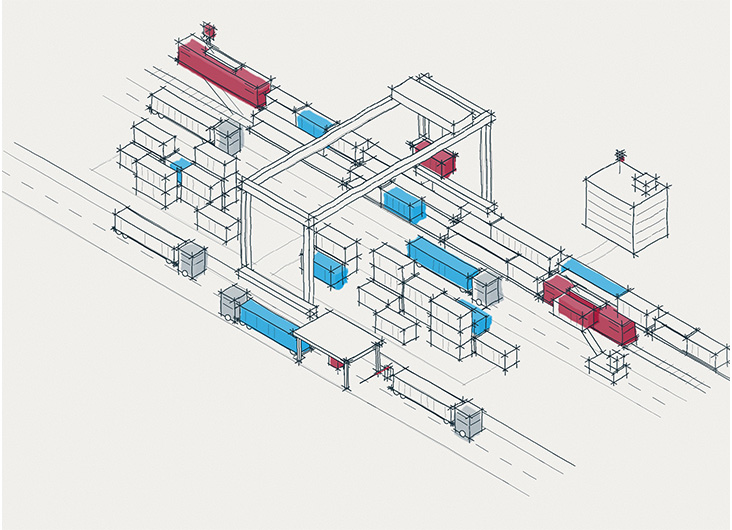
schematic terminal

Module Overview

A system for every step of your terminal operations

BLU 2.0 covers all core operational processes at rail and container terminals—from the incoming train to the outgoing loading unit. The modules are seamlessly integrated, fully database-driven, and can be tailored precisely to your operational structure.

Explore our complete terminal control system now in the interactive overview below:

Click a marker – the summary opens directly on the map.
RAIL SIDE · SIDING GANTRY CRANE TRACK 1 TRACK 2 TRACK 3 TRANSSHIPMENT AREA DEPOT · STORAGE BLOCK A DEPOT · STORAGE BLOCK B ROAD SIDE · GATE GATE CONTROL CENTER & OFFICES
Function
Legend
interactive function
intermodal loading unit (ILU)
empty container
free slot
carrier wagon / truck
handling equipment
Modules in detail

Functions by area

BLU2Mobile: Terminal Control on a Tablet

BLU2Mobile is the mobile extension of BLU2 and enables terminal employees to access all relevant processes directly—regardless of their location or workstation.

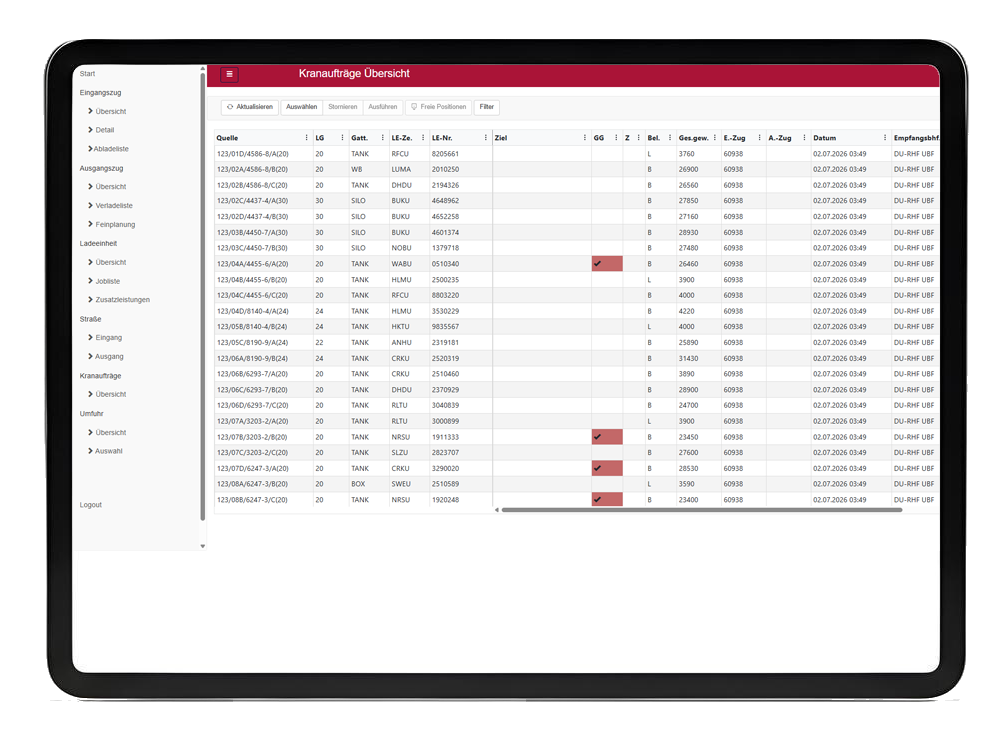
Screenshot: Mobile Crane Jobs

All Processes Under Control

Using a tablet, work orders, loading units, and train and transshipment information can be recorded, edited, and documented in real time. This reduces paper-based processes, improves data quality, and enables decisions to be made right where the work takes place—at the terminal.

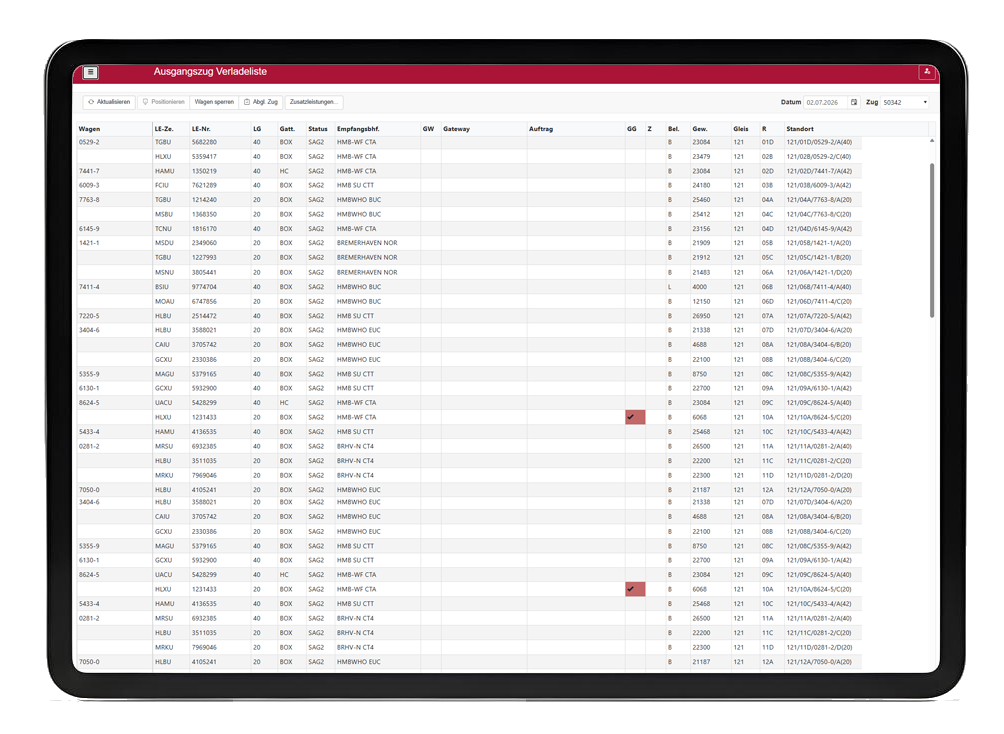
Screenshot: Mobile Departure Train

Practical Example: Departing Train

Planning and managing outbound trains on a tablet—flexible use right at the loading site. Automatically generated from the schedule or added as a special train. Optimal capacity planning, weight verification, and detailed loading planning—all at your fingertips.

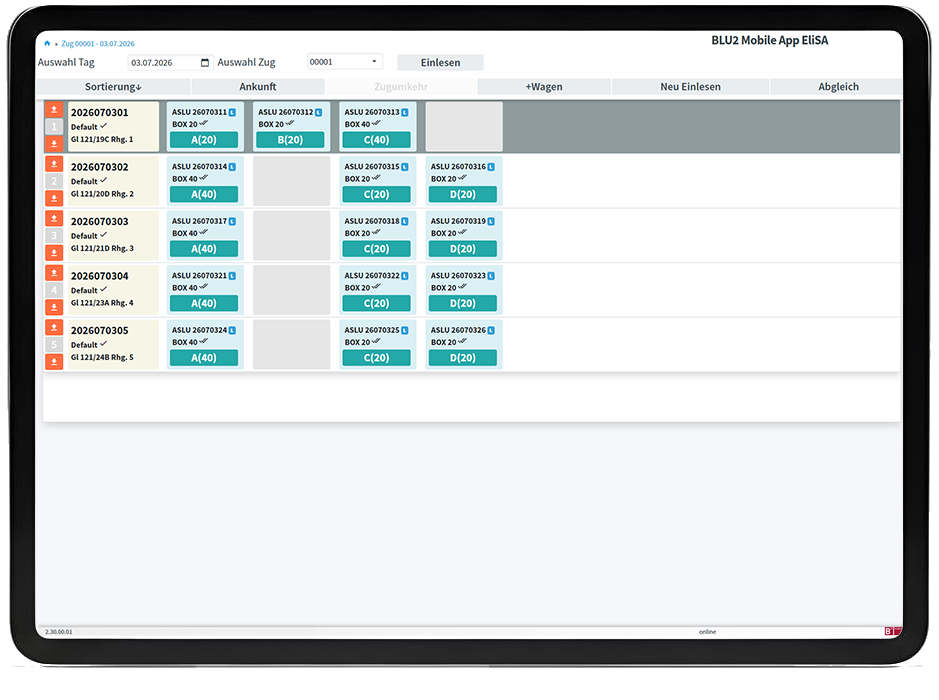
BLU2ELISA: Reconcile and process incoming shipments using the tablet

The ELISA app digitizes the train inspection process upon arrival and enables real-time, mobile verification of train and loading unit data. This reduces errors, speeds up train processing, and increases transparency in terminal operations.

The application supports the digital inspection and verification of incoming trains directly on the track.

Employees use mobile devices to record and verify car and loading unit data in real time and immediately verify it against the information stored in BLU2.

Discrepancies are detected immediately and can be addressed directly.

This improves data quality, process reliability, and efficiency in train handling.


CraneApp: Integrated Crane Control for Your Terminal

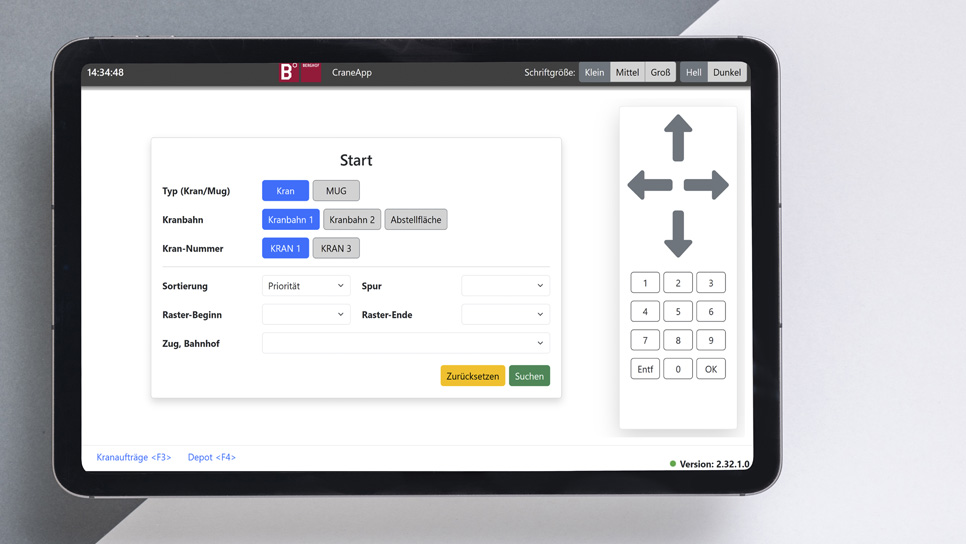
CraneApp connects BLU’s higher-level terminal control system directly to the crane level—enabling end-to-end digital and automated control of cargo handling processes. Orders are transmitted in real time, movements are logged, and capacities are utilized optimally. With the BLU2Kranterminal and CraneApp solutions, our system supports virtually all crane models, from those with a long track record of proven performance to the very latest models. 


CraneApp Interface

IBIS – Technical Infrastructure and Security

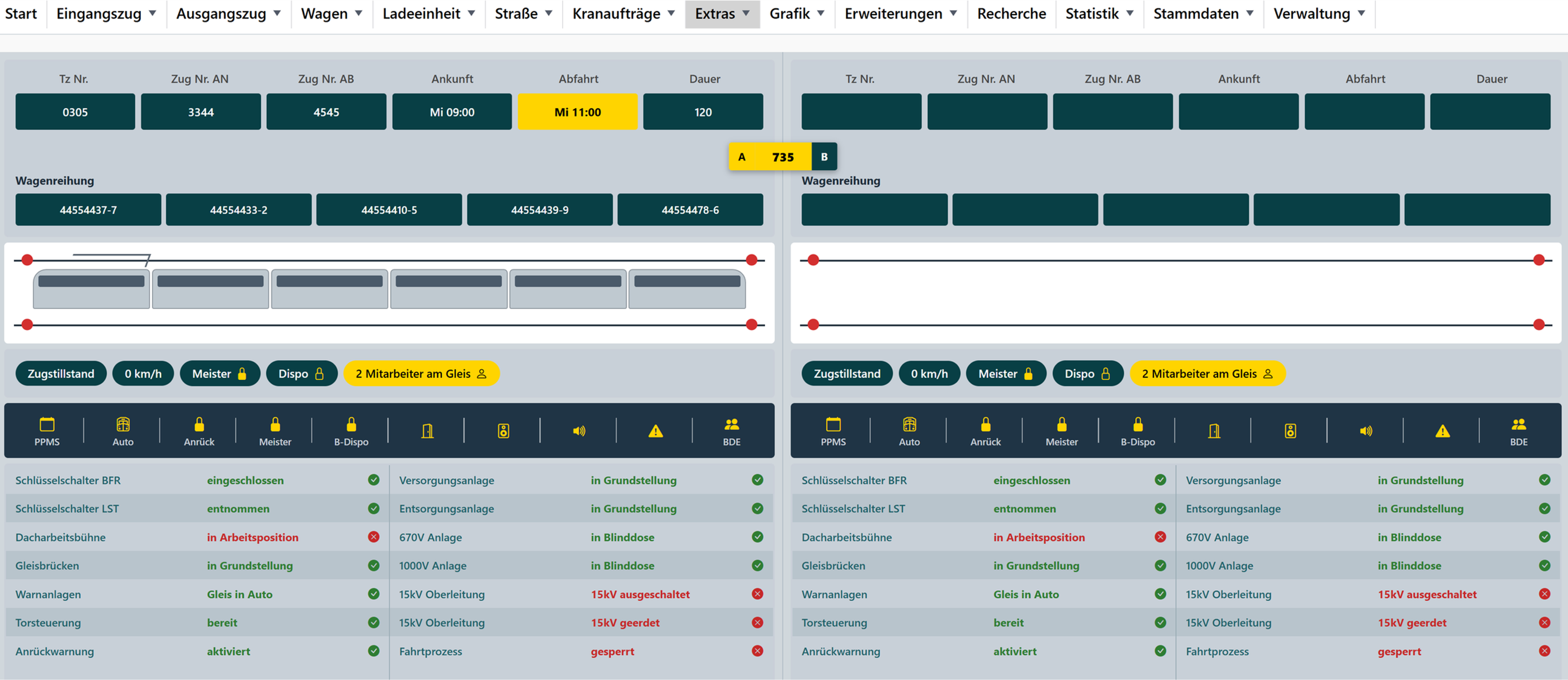
Your terminal is becoming more digital—and so is your rail infrastructure. We automate the control and monitoring of switches, signals, and railroad crossings, communicating securely with PLC and signal box technology.

A standardized interface between the TOS and the infrastructure replaces project-specific custom developments; IBIS can also be integrated in a standardized manner.

In addition: authorization and access control, vendor-neutral and flexibly adapted to your terminal—all based on our in-depth rail and safety expertise.


Interfaces – BLU2 connects the central systems throughout the terminal process

Gate, rail, scheduling, crane: Separate systems operate at every point in your terminal—BLU2 brings them all together. Video gate and gate operations, slot management, check-in, and kiosk terminals at the gate. Train Information System as well as booking, pre-registration, and status data for rail operations.

Operational master and terminal data for scheduling and processing. Warehouse management, crane and equipment interfaces, and business intelligence for cargo handling and analysis. A connected process instead of many isolated solutions:


Terminal workflow
01Gate & Truck
02Rail & Train
03Operation
04Crane & Analysis

When is BLU the right choice—and when isn't it?

BLU is not a one-size-fits-all solution for every logistics company. This overview will help you quickly assess whether BLU is a good fit for your situation.

green check mark

BLU is a good fit if you …

  • operate a container terminal, a freight terminal, or a transshipment facility
  • want to replace manual processes and Excel solutions with an integrated software solution
  • are dissatisfied with an existing TOS because specific requirements cannot be implemented and the system will not scale with your business in the future
  • need to handle increasing transshipment volumes with your existing team
  • are looking for a software partner who responds to your needs rather than relying on a rigid product cycle
  • want to build a new terminal and establish professional processes from the very beginning
red question mark

Consider alternatives if you …

  • operate a pure maritime terminal or port without any intermodal connections—there are specialized TOS providers for this
  • handle exclusively road logistics without any rail connections
  • require a pure warehouse management solution (WMS) without a terminal component
  • are looking for a global multi-site solution with a standardized rollout for dozens of locations and do not want any customizations

Not sure? 
Before making any decision, Berghof conducts a no-obligation consultation to work with you to determine whether and how BLU fits into your processes. Our customers value this openness as part of our partnership based on mutual respect.

Industry Glossary

CT: Combined transport

Freight transport in which containers or swap bodies are transported via at least two modes of transport (e.g., rail and road) without the goods themselves being transshipped. Intermodal terminals are the transfer points where the switch between modes takes place.

RU: Railway undertaking

A company that operates rail freight or passenger transport (e.g., DB Cargo, TX Logistik, Railcare). At the terminal, the rail carrier serves as the counterpart for train scheduling. BLU manages rail carrier master data and communicates arrival and departure information directly with the operators.

TEU: Twenty-foot Equivalent Unit

Standard unit of measurement for the capacity of container terminals. One TEU is equivalent to a 20-foot ISO container (approximately 6 meters long). A 40-foot container counts as 2 TEU. A terminal’s annual capacity is typically expressed in TEU.

ILU: Intermodal loading unit

A general term for standardized containers used in combined transport: ISO containers, swap bodies, semi-trailers, or trailers. ILUs are the basic unit of transshipment planning in BLU.

Sequencer

A software component in BLU that automatically sequences crane orders in an optimal order. The sequencer takes into account priorities, time slots, crane availability, and target positions—without any manual intervention by the dispatcher.

TOS: Terminal Operating System

A software solution for the comprehensive control and monitoring of all operational processes at a freight terminal—from vehicle check-in through transshipment and storage to departure. A TOS connects people, equipment, and systems and serves as the digital backbone of terminal operations.

Parking

Temporary storage of loading units on the terminal grounds when they are not being transshipped immediately. BLU manages parking spaces, monitors dwell times, and calculates parking fees as part of its integrated statistics.

Slot / Digital Check-in

A time slot assigned to a truck or train for delivery or pickup at the terminal. Digital processing in BLU centrally manages all slot reservations, reduces wait times at the gate, and improves planning for freight forwarders and terminal operators.

Transshipment Station

A specialized rail yard where loading units are transferred between trains and trucks. In BLU, this term serves as the primary location identifier: The graphical Transshipment Station overview displays all tracks, storage tracks, and positions in real time.

How can we help you?

We look forward to your call or email. You’re also welcome to send us a message using our contact form. We’ll get back to you as soon as possible.